Introduction
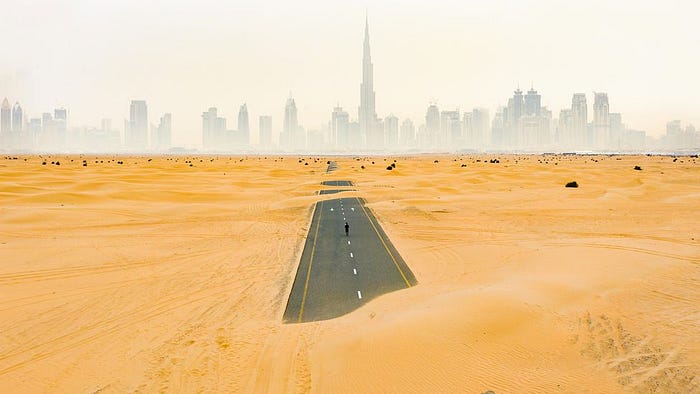
The United Arab Emirates (UAE) is one of the most water-scarce countries in the world and relies heavily on seawater desalination to meet its freshwater needs. Desalinated water accounts for over 40% of total water demand in the UAE (EAD, 2019). However, seawater desalination is highly susceptible to pollution and contamination of intake seawater. This paper analyzes the impact of potential seawater pollution on desalination in the UAE and explores alternative freshwater sources that could be utilized if desalination was disrupted.
Impact of Seawater Pollution on Desalination
Seawater desalination involves pressurizing salty seawater against a membrane to filter out salts and minerals. Even minor oil or chemical pollution can clog or contaminate the desalination membranes, reducing their efficiency or making them inoperable (Lattemann & Höpner, 2008). Desalination plants may have to cease membrane cleaning and replacement operations, disrupting water supplies. Furthermore, polluted intake water can contaminate the desalinated product water, making it hazardous for consumption. The economic and public health consequences of such pollution events can be severe for the UAE’s desalination-dependent population.
Alternative Water Sources for the UAE
Groundwater Extraction
The UAE has significant groundwater reserves, predominantly in the northern emirates. Tapping into groundwater aquifers could temporarily offset reductions in desalinated water. However, excessive groundwater pumping risks aquifer depletion and salinization (Murad et al., 2007). Groundwater would be a limited short-term alternative.
Water Reuse
Treating and reusing wastewater is already practiced in the UAE for landscaping and district cooling (Amer et al., 2015). Direct and indirect potable reuse could be scaled up to maximize reuse potential in an emergency. However, health and social acceptance concerns of consuming repurified wastewater would need addressing.
Stormwater Harvesting
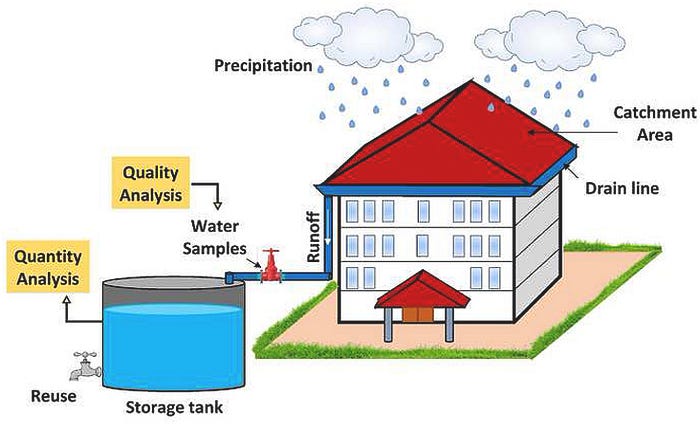
Artificially recharging groundwater using checked dams and reservoirs to capture rainfall and runoff could supplement aquifers (Sherif et al., 2012). While helpful, the UAE’s arid climate limits this option’s potential.
Inter-Emirate Water Transfers
Freshwater could be piped from the northern emirates to coastal cities. However, lack of infrastructure and high costs make this a challenging prospect (Brook et al., 2006).
Emerging Alternatives
Atmospheric Water Generation
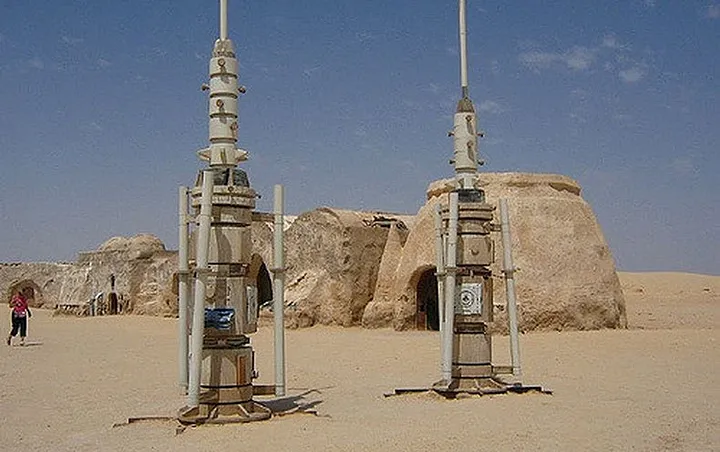
Technologies that extract potable water from atmospheric humidity could be viable in the UAE’s humid coastal regions (Mendoza-Escamilla et al., 2019). Although limited in volume, atmospheric water generation could provide supplementary household-scale water sources.
Solar Desalination
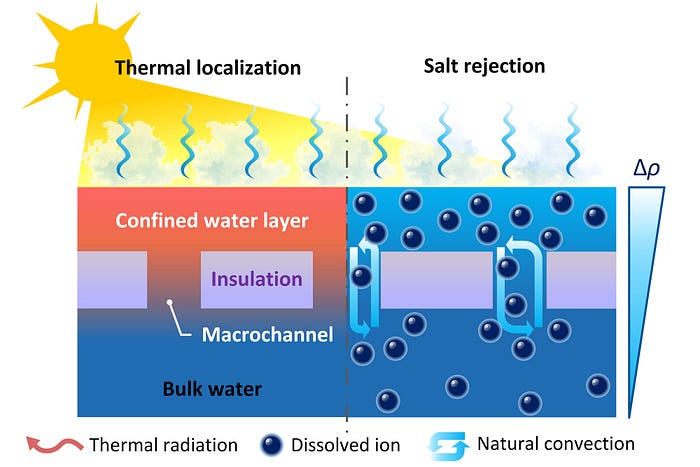
Emerging solar thermal desalination techniques could potentially treat seawater contaminated with chemicals, oil, or algae by distilling water vapor, leaving contaminants behind (Alarif et al., 2022). However, solar desalination’s scalability and economic feasibility still need to be proven.
Weather Modification
While controversial, technologies such as cloud seeding and charged ion emission could stimulate precipitation or condensation for freshwater harvesting (Khan, 2022). The UAE has already experimented with cloud seeding. Further developing technologies like Weather Generators could supplement rainwater collection.
Trans-national Water Imports
With proximity to the Arabian Sea and the Gulf of Oman, importing water via ships from sea routes or pipelines from neighboring countries could conceptually secure emergency water supplies, albeit at likely high economic and geopolitical costs.
Non-Traditional Water Sources
Exploring unconventional water sources like agricultural drainage water recycling, fossil aquifer utilization, or even iceberg towing could provide outside-the-box options during crises. However, costs, volumes, and quality concerns exist.
Conclusion
Seawater desalination is critical for the UAE, and pollution events could have severe implications. While groundwater, reuse, and stormwater can supplement reduced desalination outputs, emerging technologies, and non-traditional water sources provide promising long-term alternatives worth investing in for strategic water security. Water transfers and cooperation within the UAE and region also warrant consideration. An integrated portfolio approach combining multiple alternatives will hedge risks and build resilience.
References
Alarif, S., Tanvir, M. S., Faisal, M., & Khan, Z. (2022). Advances in thermal desalination technologies — A comprehensive review. Desalination, 532, 115719.
Amer, K. M., Ulrich, A. C., Siddiqi, A., & Dhib, R. (2015). Water reuse in the UAE. Water Reuse Association, 15(3), 58–63.
Brook, M. C., Al Houqani, H., & Al Mehairi, A. (2006). Characteristics of the water resources and demand in the United Arab Emirates (UAE). In Water demand management (pp. 183–205). Taylor & Francis.
EAD. (2019). Climate Change Impacts on Water Resources — Abu Dhabi Emirate, United Arab Emirates. Environment Agency.
Khan, Z. A. (2022). Rainfall enhancement and cloud seeding — A global overview. Atmospheric Research, p. 266, 105931.
Lattemann, S., & Höpner, T. (2008). Environmental impact and impact assessment of seawater desalination. Desalination, 220(1–3), 1–15.
Mendoza-Escamilla, J. A., Hernandez-Rangel, F. J., Cruz-Alcántar, P., Saavedra-Leos, M. Z., Morales-Morales, J., Figueroa-Diaz, R. A., Valencia-Castillo, C. M., & Martinez-Lopez, F. J. (2019). A feasibility study on using an atmospheric water generator (AWG) to harvest fresh water in a semi-arid region affected by mining pollution. Applied Sciences, 9(16), 3278.
Murad, A. A., Al Nuaimi, H., & Al Hammadi, M. (2007). Comprehensive assessment of water resources in the United Arab Emirates (UAE). Water resources management, 21(9), 1449–1463.
Sherif, M. M., Singh, V. P., & Amer, A. M. (2012). A Note on Reliability Analysis of Rainfall–Runoff Process for Water Resources Management. Water resources management, 26(10), 2953–2964.
https://www.weathergenerator.net/post/local-weather-modification-process